Practical electrical and control solutions for complex marine systems
WTM Electrical works across marine electrical, control-panel, automation and system-integration requirements, starting with the application rather than a predefined product or discipline.
WTM Electrical works across marine electrical, control-panel, automation and system-integration requirements.
The approach starts with understanding the application rather than forcing every problem into a predefined product or discipline.
Solve the application first
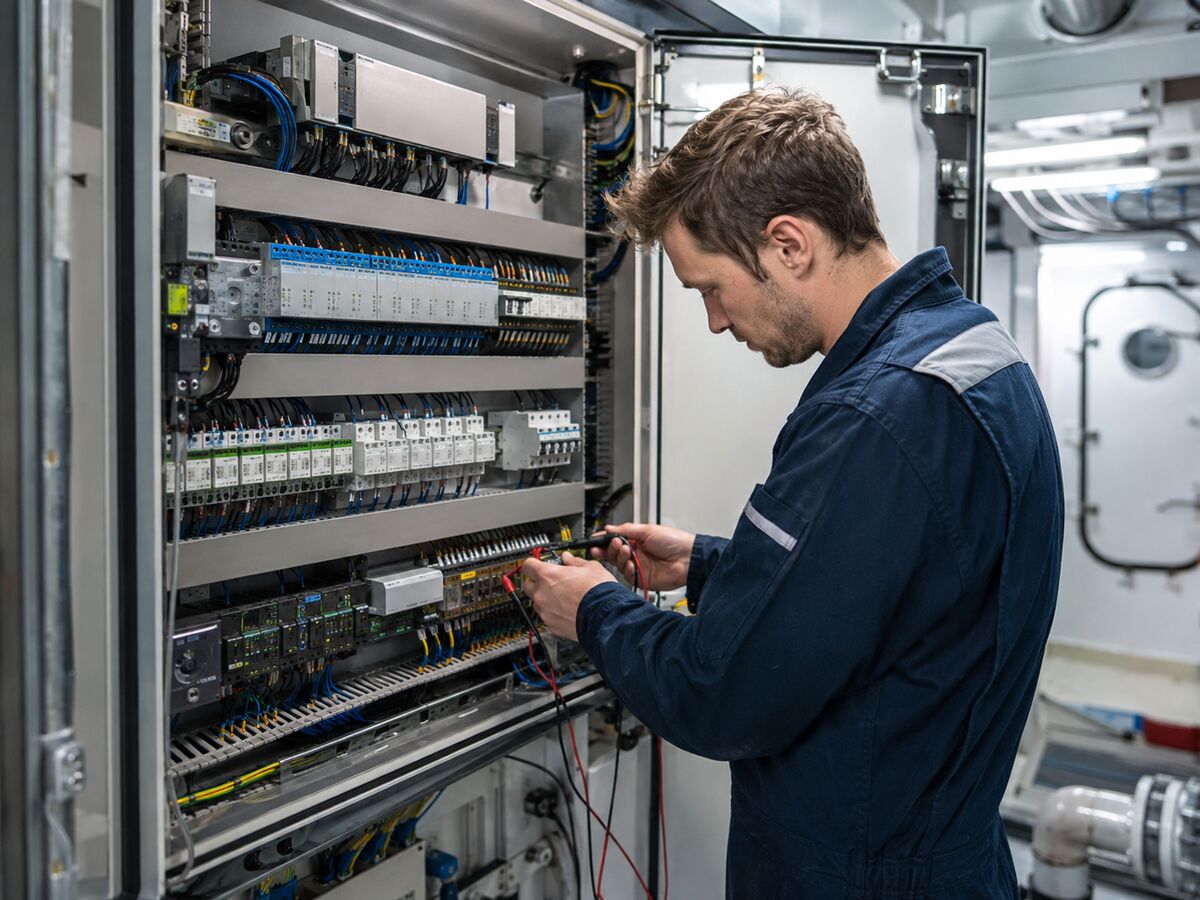
WTM's approach is to start with what the system needs to do, understand the equipment and interfaces around it, and then work toward a practical electrical and control solution.
Electrical and control systems are there to make the vessel or equipment work.
That sounds obvious, but it is easy for a project to become centred around individual products, drawings or supplier boundaries rather than the operating requirement.
WTM's approach is to start with what the system needs to do, understand the equipment and interfaces around it, and then work back toward a practical electrical and control solution.
Complexity only earns its place when the application needs it
A more complicated system is not automatically a better one.
The goal is to use the level of control, automation and integration that makes sense for the operating requirement.
- That may mean a simple electrical solution.
- It may mean a PLC and distributed I/O architecture.
- Or it may mean integrating several existing systems without replacing them.
The application should decide.
The problem may cross more than one discipline
A marine electrical system can involve power, controls, instrumentation, communications and operator interfaces that don't always fail independently or get designed by the same company.
A marine electrical system can involve power, wiring, control panels, PLC, I/O, sensors, instrumentation, communications, machinery and operator interfaces.
Those areas do not always fail independently. They also do not always get designed, built or supplied by the same company.
WTM's ability to work across several of those layers helps keep attention on the behaviour of the overall system.
Fewer assumptions between the parts of the system
When the same technical conversation can cover the panel, PLC, I/O, instrumentation and field equipment, fewer decisions have to be made in isolation.
That can make it easier to identify interfaces early, understand faults later and keep the system aligned around what the customer actually needs it to do.
Joel Schodde
Director — WTM Electrical
Joel leads WTM Electrical with a practical approach to marine electrical, control and automation work.
The focus is on understanding what the vessel or equipment needs to achieve, looking at how the wider system fits together and finding a solution that makes sense for the application.
Have a project you want another technical set of eyes on?
Start with the vessel, equipment or system requirement.
You do not need to have the technical answer worked out first.